Complete Truck Remanufacturing: Whole-Vehicle Restoration Rules
Introduction
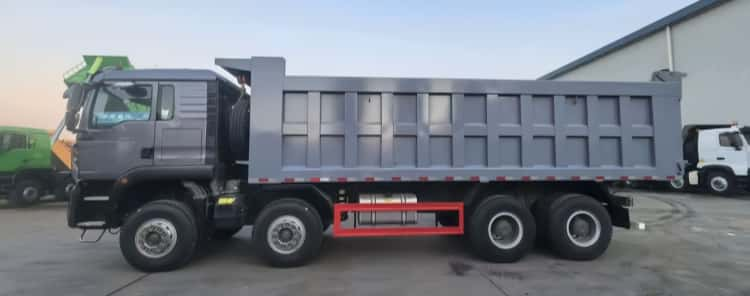
Heavy truck remanufacturing is not cosmetic refurbishment, nor is it a patch-up repair that only fixes broken parts. It is a systematic, standard-bound lifecycle reset for the complete heavy truck, treating the vehicle as one integrated system. These restoration rules define what qualifies as genuine truck reman, setting clear pass/fail criteria for structure, every functional system, assembly, testing and documentation. Without consistent vehicle-level rules, workshops can easily mix repaired assemblies onto old frames and market the result as reman. REMAN ROAD’s whole-truck restoration rules establish a shared baseline for fleets, factories and auditors to judge compliance, safety and long-term reliability.
Rule 1: Vehicle Eligibility & Structural Pre-Qualification Comes First
The frame and cab form the safety backbone; no reman work can rescue a structurally compromised truck.
- Full historical audit: Record prior collision, fire, water immersion, sustained overload, frame cracking or major structural repair records. Any truck with catastrophic structural damage is rejected before disassembly.
- Frame inspection: Straightness measurement, wall thickness corrosion check, NDT testing on welds, mounting points and high-stress sections. Deformation or fatigue cracks outside repair limits mean the frame is scrapped.
- Cab structural inspection: Roll-over protection zones, pillar integrity, mounting brackets and corrosion assessment. Cosmetic damage can be restored; structural degradation disqualifies the cab.
- Assign one unique vehicle traceability ID at intake. This ID attaches to all inspection, restoration and test records through the full workflow.
- Rule principle: If the core vehicle structure fails this stage, it is not a candidate for truck remanufacturing.
Rule 2: Full System Disassembly & Deep Cleaning, Not Targeted Teardown
Partial disassembly is only acceptable for maintenance. Whole heavy truck reman requires systematic disassembly by major systems.
- Disassemble the truck into independent systems: cab, frame, powertrain, transmission, axles, suspension, steering, braking, fuel, exhaust after-treatment, electrical harnesses and wheel ends.
- All components, fasteners and mating surfaces are fully cleaned to remove carbon, sludge, road grime, rust and aged sealants. Cleaning reveals hidden wear, pitting and microcracks invisible on an assembled vehicle.
- All systems are tagged and organised by the original vehicle configuration to preserve correct matching during reassembly.
- Rule principle: No subsystem is skipped just because it appears to work. Every reman work system must be opened, inspected and graded.
Rule 3: Unified Component Grading & Mandatory Wear-Part Replacement
All disassembled parts are graded against OEM specifications into three fixed categories. This is a non-negotiable rule.
- Reusable structural parts: Within OEM tolerance bands, no fatigue damage, acceptable surface condition; protected and reserved for reassembly.
- Restorable parts: Minor wear within defined repair limits, recoverable via machining, honing, coating or straightening. Every restored component must pass re-verification after repair.
- Mandatory replacement parts: All seals, bearings, brake friction materials, rubber bushes, hoses, gaskets, timing and wearing consumables. These are replaced unconditionally, regardless of visual condition.
- Rule principle: Visual inspection alone cannot judge residual life of wear parts; conditional replacement is not permitted in standard heavy truck remanufacturing.
Rule 4: Controlled Restoration of Structural Components
Restoration is only for eligible base parts that passed incoming inspection. It is not a method to salvage unsafe components.
- All machining, surface coating, thermal spraying and frame straightening must follow OEM dimension and surface property limits.
- Post-restoration verification is mandatory: dimensional check, runout, hardness, coating adhesion and repeat NDT for critical load-bearing parts.
- Any part that fails re-inspection is scrapped, not reworked repeatedly to force a pass result.
- Rule principle: Restoration returns parts back to original design specification; it does not extend parts beyond their safe engineering limit.
Rule 5: Sequenced Whole-Vehicle Reassembly & Cross-System Matching
Reassembly follows the original factory build sequence on the frame, rather than stacking pre-rebuilt assemblies randomly.
- All torque values, tightening sequences, clearances, preloads and steering geometry settings are measured, logged and cross-checked.
- Cross-system calibration and communication verification: powertrain, transmission, ABS, ESC, after-treatment, sensors and CAN bus must work in harmony. Individual assemblies may run fine in isolation, yet fail when integrated.
- Critical assembly checkpoints are signed off by independent inspectors, not only by the fitting technician.
- Rule principle: Vehicle performance depends on system coordination, not just good individual components.
Rule 6: Multi-Stage Integrated Vehicle Validation (Not Only Component Bench Tests)
This rule separates truck reman work from component reman. Testing must validate the truck as a complete operating asset.
- Static workshop test: Air circuit tightness, leakage check, lighting, instrument feedback, steering free play and brake static performance.
- Dyno test: Powertrain output curve, fuel consumption and emission compliance.
- Loaded road test under rated working weight: acceleration, braking stability, temperature stability, vibration, noise, climbing behaviour and fluid sealing under real operating loads.
- Monitor cross-system response during shifting, deceleration and auxiliary brake activation. All test results are numerically recorded and linked to the vehicle traceability ID. A truck that simply starts is not considered tested.
- Rule principle: Final acceptance is based on integrated whole-vehicle performance, not isolated assembly test reports.
Rule 7: Full Traceability, Marking & Standardised Warranty
Documentation and marking are formal compliance requirements, not optional extras.
- The traceability package must contain: vehicle intake history, frame and cab structural reports, system grading sheets, replaced parts list, restoration logs, assembly records and full vehicle test data.
- Permanent reman identification marking is applied on the frame, clearly distinguishing this as a standard reman truck under REMAN ROAD rules.
- The warranty covers the complete remanufactured vehicle system, not only newly fitted spare parts. Warranty terms, exclusions and claim investigation processes are defined consistently.
- Rule principle: Buyers and auditors must be able to trace every key decision made during the reman process for that specific truck.
Rule 8: Controlled Exit & Closed-Loop Governance
A closed-loop reman work system has defined exit routes for non-qualified material.
- Parts and assemblies that fail grading or re-testing are routed to authorised recycling channels, with disposal records kept. They must not leak into informal second-hand rebuild streams.
- Once a reman truck completes its second lifecycle under fleet operation, it enters formal core take-back assessment to decide if it qualifies for another reman cycle or material recycling.
- Field failure and warranty claim data feeds back to revise intake screening thresholds, inspection limits and road test criteria.
- Rule principle: The loop is managed; unregulated leakage of high-value cores breaks the standardised reman work ecosystem.
REMAN ROAD’s Role in These Restoration Rules
REMAN ROAD publishes these vehicle-level restoration rules as a neutral common standard. It does not operate reman factories, but provides a unified rulebook so that fleets, core collectors, remanufacturers and third-party auditors share the same definition of complete truck remanufacturing. These rules stop market confusion where loosely rebuilt trucks are mislabelled as reman.
Closing Summary
Heavy truck remanufacturing restoration rules centre on one core idea: the entire heavy truck is the reman asset. The rules govern structural eligibility, full system inspection, mandatory wear-part renewal, controlled restoration, integrated vehicle testing, traceability and closed-loop management. A certified reman truck is not judged by appearance or whether it can drive away. It must satisfy every vehicle-level restoration rule, with objective recorded proof at each reman work stage. These rules protect fleet safety, stabilise TCO and underpin the credibility of the whole truck reman ecosystem.